
Blogs
ESI (General) Regulations, 2026: 7 Key Changes Every Employer Must Know – Comply360
- July 14, 2026
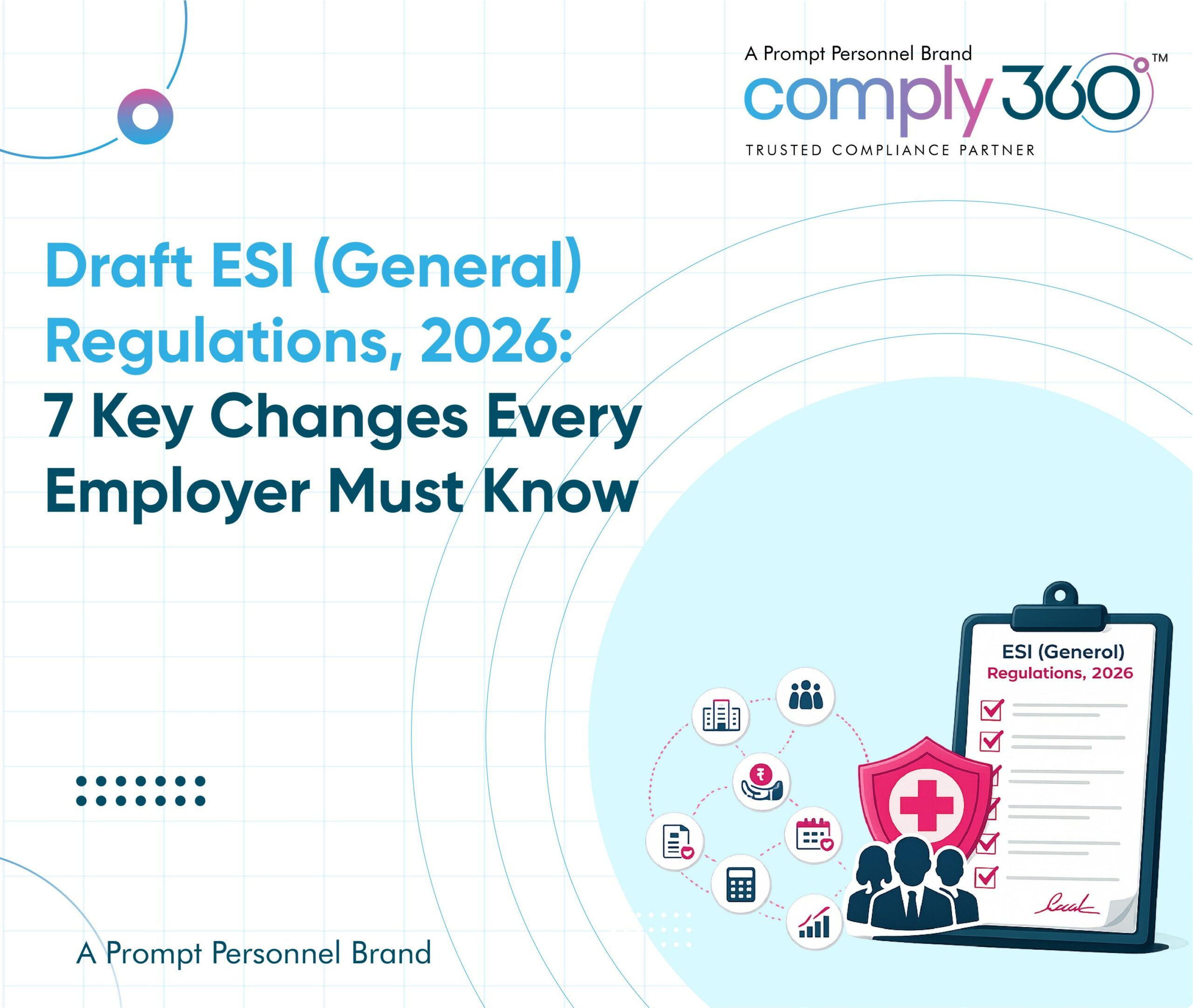
The Employees’ State Insurance Corporation has approved the framing of the Draft Employees’ State Insurance (General) Regulations, 2026 under the Code on Social Security, 2020.
Once formally notified, the proposed regulations are expected to replace the ESI (General) Regulations, 1950 and introduce more digital, frequent and structured compliance requirements.
7 Key Changes at a Glance
- Monthly Return of Contribution Filing: Employers would be required to file the Return of Contribution every month through the specified portal, within 15 days from the end of the month. All monthly returns for a contribution period would need to be completed within 45 days from the end of that period.
Employer impact: Payroll, HR and compliance teams would need a tighter monthly reconciliation process for employee wages and contributions. - Shorter Closure Compliance Timelines: Where an establishment closes permanently, pending returns and outstanding contributions would have to be completed within 15 days from the date of closure.
Employer impact: Organizations would need a defined closure-compliance process covering payroll, employee records, contractor data and contribution payments. - Electronic Payment of Contributions: ESI contributions would have to be paid electronically into an ESIC-authorised bank within the prescribed timeline.
Employer impact: Employers should maintain clear digital records of challans, transaction references and payment confirmations. - Digital Insured Person Cards: Insured Person Cards would be generated electronically after employee registration. Employees could also report changes in family details electronically.
Employer impact: HR teams would need to ensure that employee and dependent information remains accurate and updated on the portal. - Online Accident Reports and Benefit Claims: Accident reports and claims for sickness, maternity, disablement, dependents’ and funeral benefits could be submitted electronically.
Employer impact: HR teams may need to support employees with online claims, documentation and accident-reporting procedures. - Electronic Employee and Contractor Registers: Employers and contractors would be permitted to maintain prescribed employee registers electronically. These records would have to be preserved for five years from the date of the last entry.
Employer impact: Principal employers would need stronger controls over contractor employee records, wages and ESI contribution details. - Revised Interest and Damages: Delayed contributions would attract interest at a rate notified by the Central Government. ESIC may also levy damages at 1% of the outstanding amount for every month of delay.
Employer impact: Employers should strengthen internal payment checks to avoid additional financial exposure.
Why These Changes Matter
The proposed regulations indicate a shift towards monthly reporting, digital records and online employee services.
Employers should review:
- Monthly return and payment workflows
- Payroll and contribution reconciliation
- Contractor compliance records
- Employee and dependent data
- Accident-reporting procedures
- Digital record retention
- Establishment closure processes
Early preparation can help organizations identify process and data gaps before the regulations are formally brought into force.
Download the Draft ESI Regulations
Need help mapping these changes to your existing ESI compliance process? Talk to the labour law advisory team today! Reach out to us at business@comply360.in or call +91 8657864977
FAQs
-
What is the Draft ESI (General) Regulations, 2026?
It’s ESIC’s proposed replacement for the ESI (General) Regulations, 1950, issued to align ESI administration with the Code on Social Security, 2020. It’s currently in the draft/consultation stage.
-
When will the Draft ESI Regulations, 2026 come into force?
As a draft, the regulations are open for stakeholder feedback before final notification. Employers should track the official Gazette for the notified effective date.
-
What is the biggest change for employers?
The shift from periodic to monthly return of contribution filing, combined with full digitization of IP Cards and benefit claims.